On Selecting Books I Read
I think of books as condensed years of knowledge that you can consume in hours of reading. I try to spend an hour a day reading books and I use Goodreads to manage my reading habit.
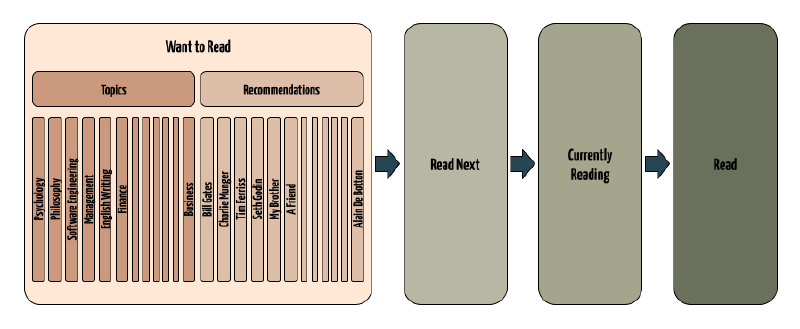
In this post, I’ll try to showcase my system for selecting, classifying, and reading books. The process is illustrated in the picture below.
Step 1: Finding Interesting Books
I’m always on the lookout for good books, mostly non-fiction with the occasional historical fiction or fantasy. I usually get mine from podcasts, blog posts, and friends. I try to find foundational books: the ones that started a field of science, changed an existing one or inspired a movement in society. I love reading autobiographies and I find it easier to understand the big picture of a field of knowledge through the thoughts of its founders.
Once a book piques my interest, I add it to my “Want to Read” shelf.
In addition to the basic shelves provided by the service, I added multiple shelves to tag books I want to read with more information. My tags mostly fall into two categories:
- topics: can be a reference to anything from a field of knowledge, a narrow subject or a book genre.
- recommendations: the shelves are called “thumbsup-name”, referencing the person who made the recommendation. I don’t have to know the person: it can come from a friend, a podcaster or Bill Gates.
Step 2: Selecting Books to Purchase
On Goodreads, you can create what they call “exclusive shelves”. By default, the website provides three exclusive shelves: Want to Read, Currently Reading and Read. I added a fourth one that I called: “Read Next”. This shelf is meant to store the books that I purchased and haven’t started reading.
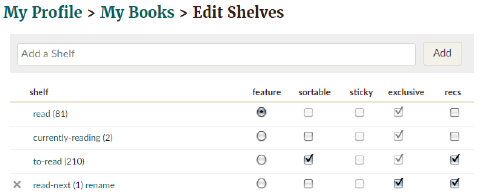
I usually buy books in bulk once I start reading the last book on the “Read Next” shelf.
I mostly select them from my Want to Read shelf based on:
- Topics I’m currently interested in
- Length: I rarely read two long books in a row. I think of the average length of a book as about 300 pages.
- Genre: I try to read a fiction book every couple of non-fiction books.
- Price: When in doubt, I buy the cheaper book.
Step 3: Selecting a Book to Read
I rarely read multiple books simultaneously. Every time I finish a book, I move it to my Read shelf and select a book from my Read Next shelf.
Conclusion
This system served me well in the last two years. Using these three steps, I rarely find myself reading a book that I don’t find interesting while keeping a reasonably sized pile of books waiting to be read.