A 5-Year Survival Plan
“Money does not buy you happiness, but lack of money certainly buys you misery” – Daniel Kahneman
After my father died in 2009, I needed a plan. I had limited time and budget to secure decent living conditions for myself and my family. The previous post was quite emotional. This one won’t be. I hope I will manage to make the stakes clear and showcase the problems I faced and the choices I made over the five years from 2009 to 2013.
Here are the resources we had after my father’s death:
- Each sibling received 670 TND a month until the age of 25 as long as they were studying. I was 21 years old with at least 5 years of studies left. My brother was 18.
- Each sibling received around 16,000 TND as a one-time life insurance payment.
- My mom received no benefits since she divorced my dad one year before his sudden death.
- We didn’t have health insurance anymore since it was provided by my dad’s job.
My family was reduced to myself, my younger brother, and our mother. 1340 TND a month is better than what most people have in Tunisia. It gets you into the lower middle class. A starting software engineer salary was around that figure. But if I was looking to build a future that included a family of my own, this figure seemed way too low to achieve anything. Especially since I already had to take care of my mom financially in the first years before my younger brother could help us out. I would never be able to get anywhere with a Tunisian engineer salary. It was clear to me from the start that, if I wanted a resemblance of a good life, I had to go to Europe where salaries were way higher.
Family is a staple of Tunisian culture. An average household consists of a father whose responsibility is to put food on the table, a mother who takes care of the house, and two to three children who focus on their free education. Divorce is not very common. Arranged marriage was not uncommon at the time my parents met, although theirs wasn’t. In other words, being a divorced 50-year-old woman living by yourself was considered a social failure, and leaving the country would put my mom in that spot. During that first summer, I thought my younger brother would stay in Tunisia, but he ended up leaving for Europe before I did. It fell to me to put our mom in that situation, and I decided to leave only if I got an opportunity that matched my professional goals and if I had my mom’s full support (which I had from the beginning).
I was already enrolled in preparatory school studying mathematics and physics among other subjects, one of the most cut-throat educational environments in the country. And I had already failed my first year there. Before the big change in my situation, I was entertaining the idea of switching to a less elitist computer science school. But now that I had limited time to find a job in Europe, my best chances were to get into the best computer science school in the country and be the best there. The worst outcome in that scenario would be a Tunisian computer science engineer salary of around 1,400 TND.
At its core, the preparatory school system is 4,000 of the brightest baccalaureates competing for around 2,000 spots in publicly funded engineering schools. Students must pass a national contest (the Concours) and choose their school based on their rank among the 4,000 participants, which is determined by a score. The program is designed to be completed in two years, and only one failure is allowed; otherwise, you’re kicked out. Some people intentionally fail their second year to get more time to prepare for the Concours. To discourage that, a penalty is applied to students who take three years instead of two. Based on past sessions, I calculated that to get the school I wanted, my score needed to put me in the top 12% after the penalty. The penalty would hurt me the least if I were in the top 2%, and it would be disastrous if I were only in the top 12%. So to be on the safe side, I needed to aim for the top 2%.
A plan was made.
Now that my 5-year plan was clear and the first milestone was set, I had to focus on one thing: be in the top 2% in the National Contest for Access to Engineering Schools in Tunisia, aka the Concours.
There was a big problem, though: my self-esteem had been destroyed during the previous year. The image I had of myself as a bright student was shattered, and my confidence in my ability to know anything was at its lowest. During the last year, I was more inclined to trust my neighbor’s answer on a test than mine and tended to change my answers to match theirs. So, if I wanted to be in the top 2% in two years, I had to rebuild my self-esteem from scratch in one year and build a base of knowledge in Mathematics, Physics, and Chemistry that would allow me to compete with the brightest students in the next year.
In the previous 14 years of my life, I had proved to be a bright but lazy student. Since I wasn’t going to change this aspect instantly, I had to leave it for the second year and focus on my self-esteem and, especially, on passing the first year. I needed to get the minimum required grades to pass into the second year while building my confidence in my knowledge.
A school year is made up of three trimesters. Your final grade is calculated from your results in each trimester using weighted averages. To move on to the next year, you need at least 10 out of 20 points.
During the first year, I mostly spent school days at school. I was either in class or in the library. I left home at around 7 a.m. and was back around 6 p.m. That was study time. The rest of the time was “World of Warcraft”, girlfriend, and friends time. I slowly built my base of knowledge, and I ended up achieving my top priority goals in the first year. By the end of it, I was back to being confident in my knowledge, and I had good enough grades to pass to the second year without requiring any favors from the school administration.
The second year has the same grading system as the first, yet getting 10 out of 20 only gets you a useless certificate. The only thing that matters during the second year is your rank in the Concours, and I decided that would be my only focus. Knowing my limited capabilities, I decided that I would invest my time as follows:
- I would spend half the study day in class and the other half at the library. The default schedule was packed with lessons, so I had to lighten it a bit.
- I would keep my evenings free for “World of Warcraft”, friends, and my girlfriend.
- I would pick subjects in which I would invest the whole year and build a complete understanding of them. For these subjects, I would not settle for the teachers assigned to me and would seek the best teachers there were for each subject and sneak into their classes. Even if they threw me out of their class (which happened often), I would keep showing up to the next session until they gave up and took me in (which they did).
- I would completely ignore some subjects and collect notes and previous exams from trusted friends throughout the year, to learn them in bulk during my crunch period before the Concours, when my throughput would be at its maximum.
- I would have a crunch period: one month of my life organized down to the minute, during which I would stay in my room, eat, sleep, and study. During this period, I would allocate 80% of my time to the neglected subjects and 20% to freshen up the ones I should be mastering by then.
- I would have one week after my crunch period to relax and be ready for the ultimate test: the Concours.
There was another important matter during that year: transportation. Tunisia doesn’t offer the best public transportation network. Anyone who can barely afford a car would own one. If not for the time gain or comfort, one would do it for safety reasons, as one can often get mugged on public transport. For comparison purposes, it would take me about 1 hour to get from my home to my preparatory school using only one bus, versus 15 minutes by car. If I managed to get into the engineering school I wanted, it would take me around 2.5 hours to get there using a bus followed by a tram, versus 25 minutes by car.
I was looking at five hours a day of my life spent in a hostile, uncomfortable environment. With those five stressful hours draining me every day, I knew I’d never have the energy to be the best student at the best computer science engineering school. So I decided to use my share of the insurance money to buy a used car. But first I needed a driver’s license, and I’d never driven a car before.
During that time, it was becoming clear that my younger brother was going to study in Europe. He was going to use his share of the insurance money, along with his monthly grant of 670 TND, to finance his studies in Germany. This meant that my mother and I would soon be sharing 670 TND for our expenses. Getting my driver’s license is not a cheap endeavor, and I had to do it while we, as a household, could afford it (i.e., before my brother left).
So during that year, I was also getting driving lessons and failing the driving exam. By the end of the school year, I had failed three times. I hated driving.
Still, I hit the milestone.
My base score in the Concours put me in the top 1%, but after the penalty I dropped to the top 4%. I still got into nearly all the best engineering schools in the country (all but one). After some doubt and a lot of thought, I picked computer science as planned. I also turned down a couple of scholarships for material and textile engineering degrees in France.
A month later, I finally passed the driving exam and got my license. I went straight out and bought one of the first models of the “Peugeot 206”, which cost me around 10,000 TND. It was not a great deal. The car had loads of problems during the years I used it. My brother left for Germany at the beginning of the next school year, and suddenly I had 670 TND to cover my expenses, my mother’s, gas, and a car kept breaking down.
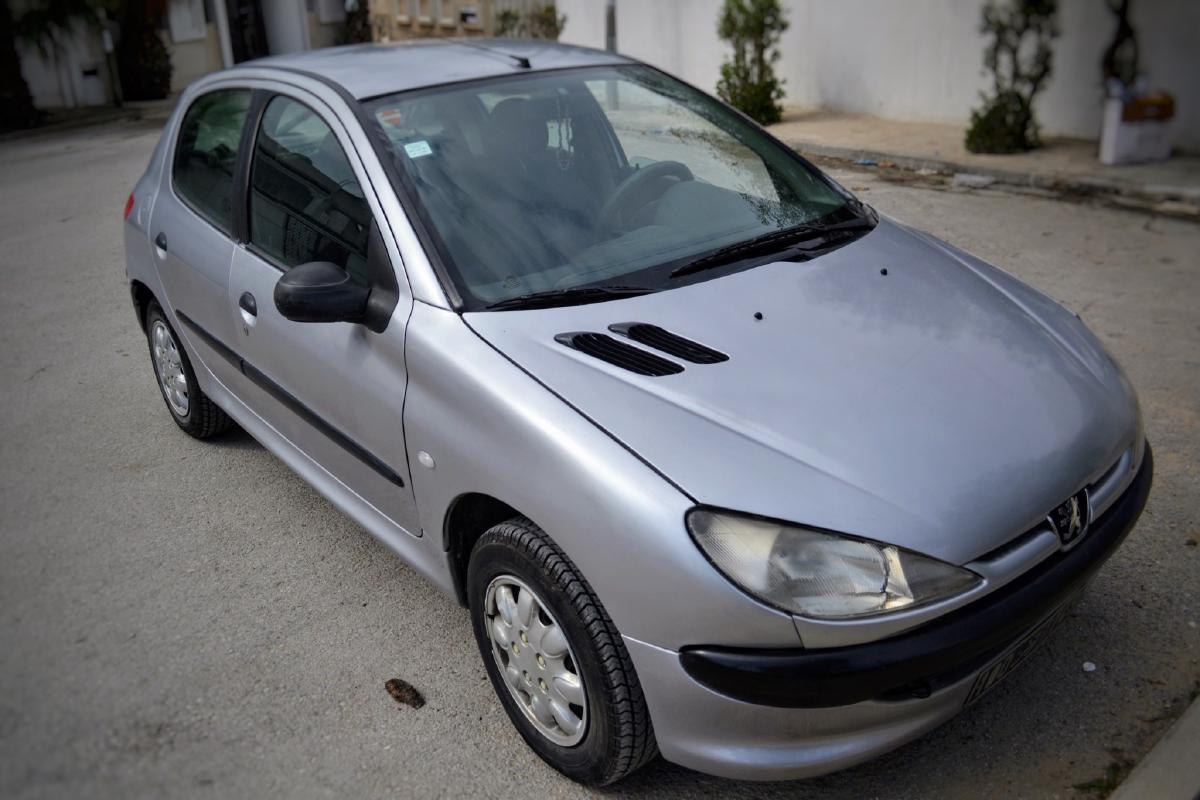
Our financial situation was not ideal, and I needed to find ways to cut down on costs. Driving 50 kilometers a day wasn’t cheap. I first tried to convince two of my future classmates to help me with expenses while I drove them to school every day. But it didn’t work. Gas shares were way more expensive than a public transportation subscription, and neither of them could afford it. I ended up finding two car owners from my town, and we carpooled for the first year. I had to suck it up in the second year since my carpooling partners had already graduated. I also joined a German night school (Goethe-Institut) to get the required level of German in case my Plan A failed.
Needless to say, by the end of 2013, I hadn’t bought a piece of clothing since 2008. I had one pair of sneakers that were in horrible shape and a low-res Nokia with a tiny screen. I also accumulated a lot of dental health problems due to all my wisdom teeth growing sideways and wreaking havoc on the rest of my mouth. Being a tech enthusiast and a programming student, I thought I should own a smartphone to tinker with, and I started saving to get one. After two years, I managed to save 450 TND.
Back to my computer science engineering school.
My first milestone was reached. If I managed to get an engineering degree, I could make around 1,400 TND easily in my first engineering job in Tunisia. This was my safety net. The real goal was to get a job in Europe. My school had partnerships with engineering schools in France. My brother was studying in Germany and could help me get an internship there if needed. So, my Plan A was to gain access to my school’s partnerships by being in the top 2% and get a scholarship to study in France by the end of my second year. My Plan B was to get an internship in Germany during my third year and try to get a job there. For that to happen, I needed a decent level of German. And my safety net was a job in Tunisia.
My biggest problem at that time was my laziness. I was never at 100% during the whole school year. I was at 60% at best during my last two years of preparatory school. My fondness for computers, programming, and video games gave me an edge compared to other students who picked this school based on prestige. But these were some of the smartest and most hard-working people in the country, and being smart was not going to cut it. I needed to drop the laziness and work harder. The one proof I had of my ability to work hard was my “crunch month” from six months earlier. But I was skeptical of my ability to do a “crunch year.”
Enter Sleh.
He’s a guy who seemed to have more hours in his day than us mere humans. He was an athlete and a bodybuilder. He played volleyball on two teams, with weekly practices. He was active in most school clubs and was known and loved by most students. He was a good student who did all of his homework. He had no prior knowledge of IT before joining my school, yet he was determined to excel.
Our relationship was rough at first. I was skeptical about this golden boy being the real deal, but he quickly proved he was willing to put in the work. I was fascinated by his organization and discipline. Before long, he became my study partner and we started hacking on projects every day at his place after school.
My study days were now stretched from the initial 7 am to 6 pm to a brand-new 7 am to 11 pm range. For the first time, I had a partner willing to do as much work as I did on an IT project. We started tackling more and more complicated projects. We participated in hackathons and programming contests. We were also study buddies and helped each other understand the school material and, by the second semester, we both got into the top 2%.
By the end of the second year, I was eligible for interviews with my school’s four partners in France. Two offered a one-year master’s degree, while the others offered a two-year engineering diploma. I felt that one year abroad wasn’t enough for me to get the hang of the system in France, so I focused on getting accepted into the double-engineering diploma schools. I thought my first interview went well, but I was surprised to be rejected. Sleh, my study partner, was accepted. That’s when I noticed something: everyone who was accepted was wearing a suit. My five-year-old jeans, my decaying sneakers, and my father’s 50-year-old shirt didn’t cut it. I had one shot left to make Plan A work. I tried to borrow a suit from a friend, but none fit. Luckily, I had saved up 450 TND for a smartphone, and I used it to buy a suit from Jules. I borrowed shoes from my best friend and went to my next interview in a more presentable outfit.
I was accepted.
I was offered a monthly scholarship of 800€ (equivalent to 2,400 TND) to study in France for two years. The most important part of this grant was that the Tunisian government provided the required insurance to get my French visa. Without that insurance included with the scholarship, I wouldn’t have been able to afford the expenses of the required guarantees to the French government (around 30,000 TND).
I felt like I’d won the lottery. Even though I had consistently put in the work for four years, I felt like the luckiest person in the world. I also felt that everything could disappear instantly. I told almost no one that I was going to France in three months. I had a lot of administrative hurdles to overcome. Tunisian administration is famous for its slowness. I had to make a lot of guesses about when things might be ready: booking flights, getting the government to pay for those flights, getting a certificate that I had a scholarship, using the scholarship certificate and the flight tickets to ask for a French visa, etc.
After months of running around like a madman, persistence, and angst, everything came together on September 13, 2013. Only one week after the school year had already begun in France—and three weeks behind my own schedule—I was finally on a flight to Bordeaux with 4,000 TND of borrowed money.
Looking back on those four years of my life, I was very depressed during preparatory school (2009–2011). I didn’t realize it at the time, but the next couple of years in engineering school were quite fun. I was finally studying in the field I wanted, and I was surrounded by people who shared my passion.